Brand website
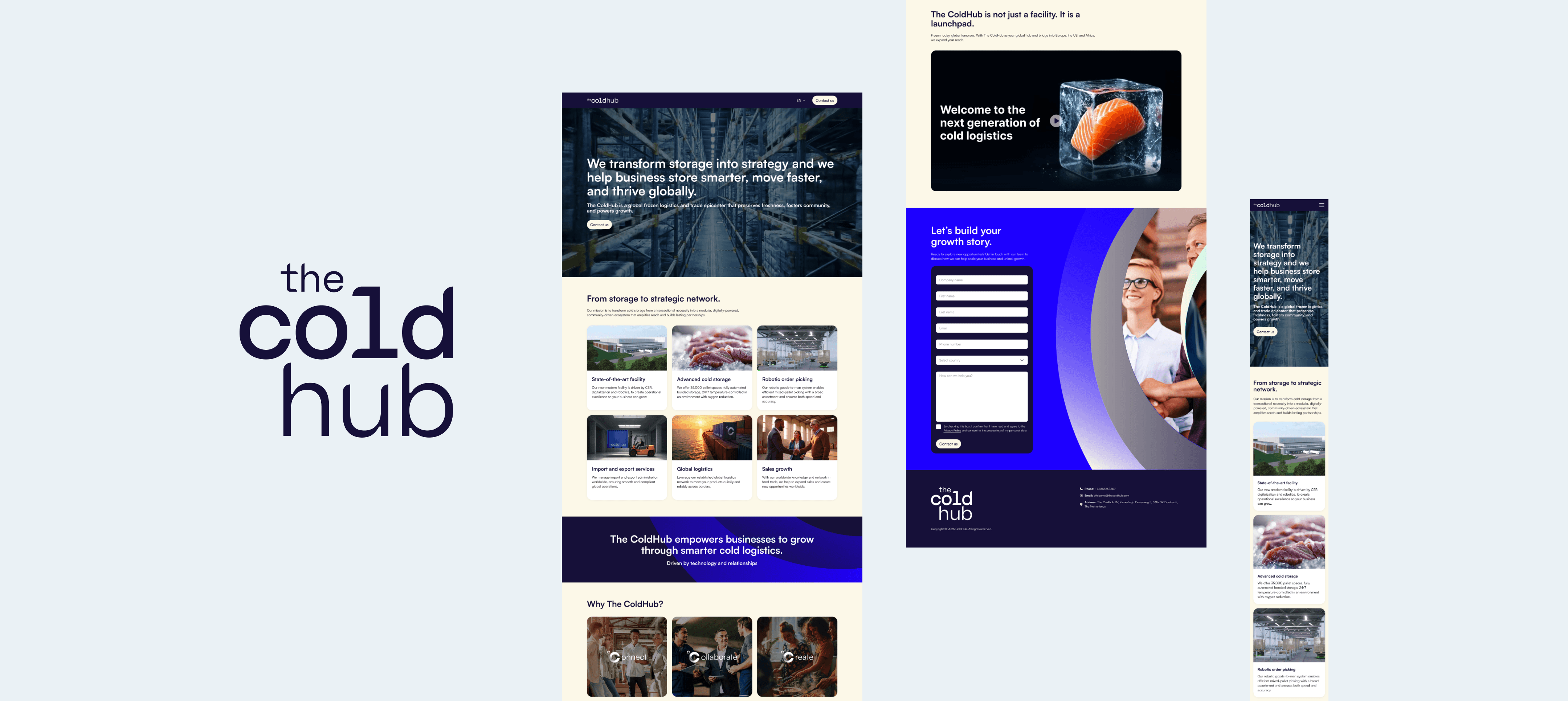
Established brand presence and drove customer conversion for The ColdHub.
Duration
Sep 2025 - Oct 2025
Team
1 UIUX Designer
1 Product Owner
1 Visual Designer
1 Content Manager
My role
UIUX Designer
Planned the website end-to-end, including scope, information architecture, and content strategy.
Designed UI components, mockups, and prototypes.
Developed the website through Webflow.
Background
Build an online presence for a new cold storage business.
The ColdHub is a new cold storage business with no prior online presence. To establish its brand and reach potential customers, the business needed an official website to introduce their services, showcase competitive advantages, and provide a channel for customers to contact sales.
Objective
Design an official website for The ColdHub to establish a clearer brand image and communicate its services effectively.
Challenge
Navigated an ambiguous design brief.
When I received this task, the requirement was to create an official website for The ColdHub. There was a lack of explanation regarding its purpose, target audience, and vision.
To resolve the ambiguity, I conducted research on the new business and consulted with stakeholders to clarify its positioning, main goals, and target audience. I also defined the project scope, determining whether it would be a standalone website and whether future expansion was planned.
Design highlights
Designed, built, and launched from the ground up within one month.
Highlight 1
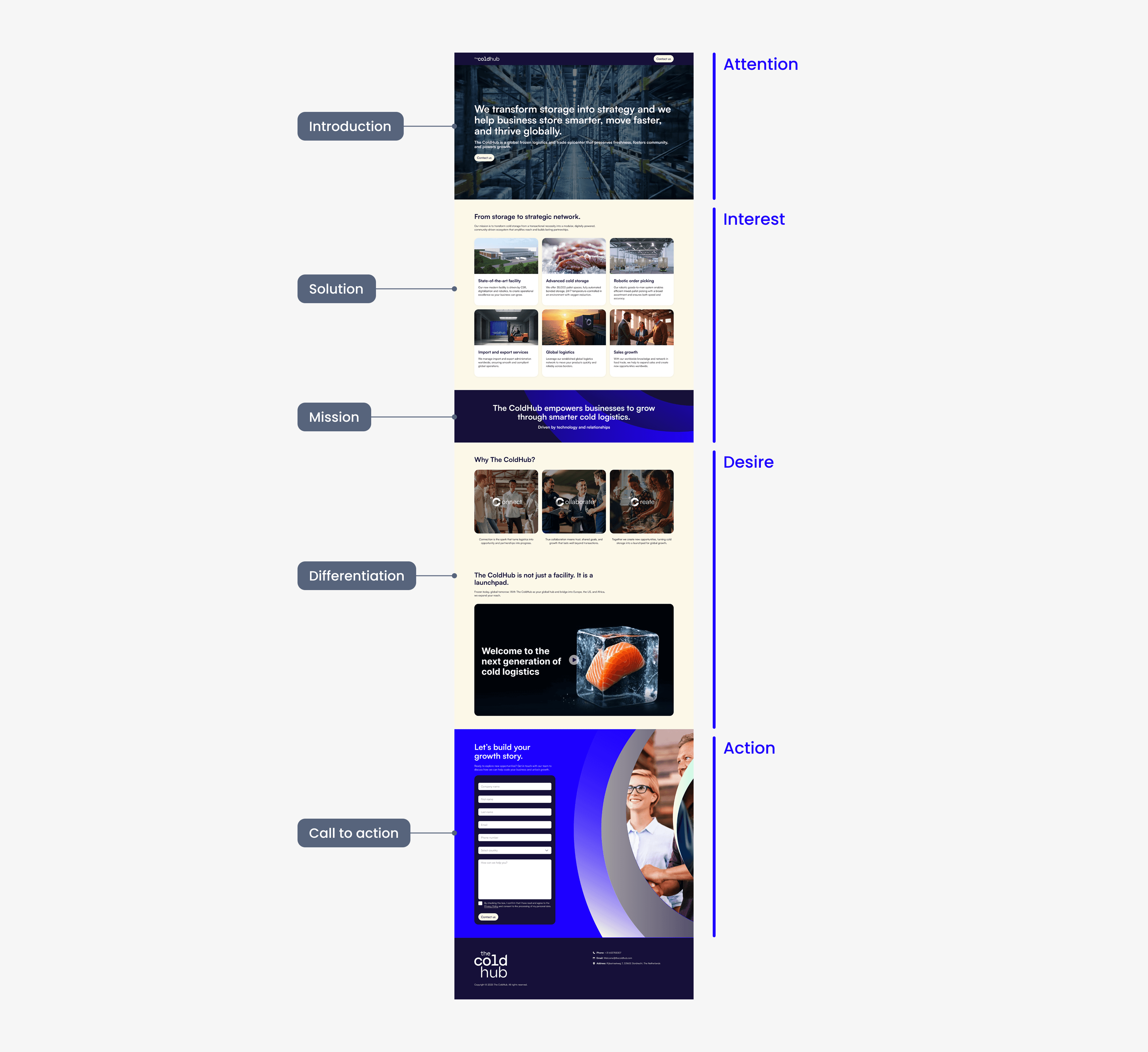
Shaped the user journey through benchmark research and a marketing funnel framework.
I analyzed the information architecture and content strategy of 10+ B2B service websites to identify patterns and gaps. The insights informed a marketing funnel–driven structure, guiding users from awareness to consideration and ultimately conversion.
Highlight 2
Translated the brand book into a scalable design system.
After receiving the brand book from the visual designer, I defined the core color palette and responsive typography for desktop and mobile, then created reusable UI components to ensure design consistency.
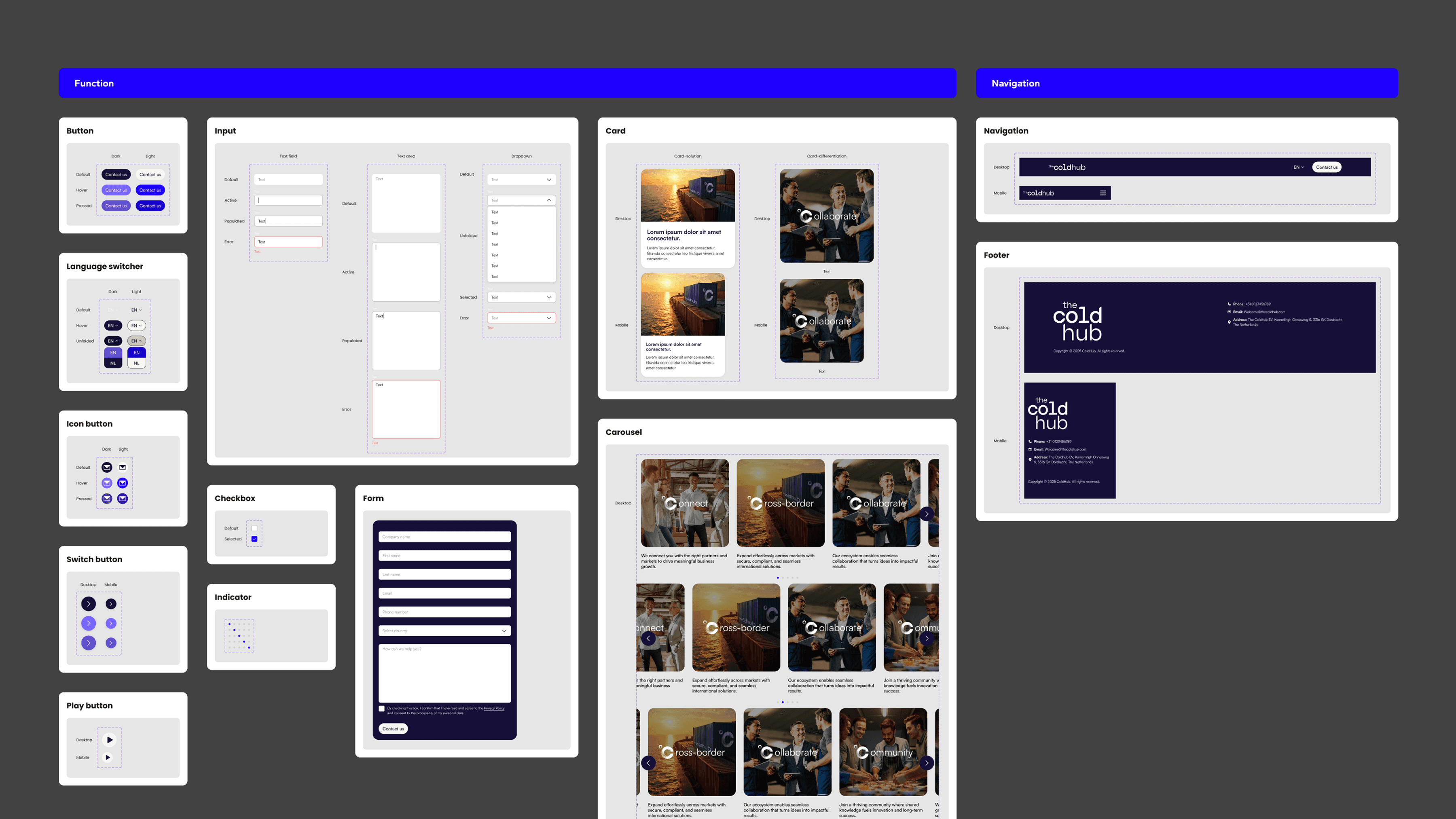
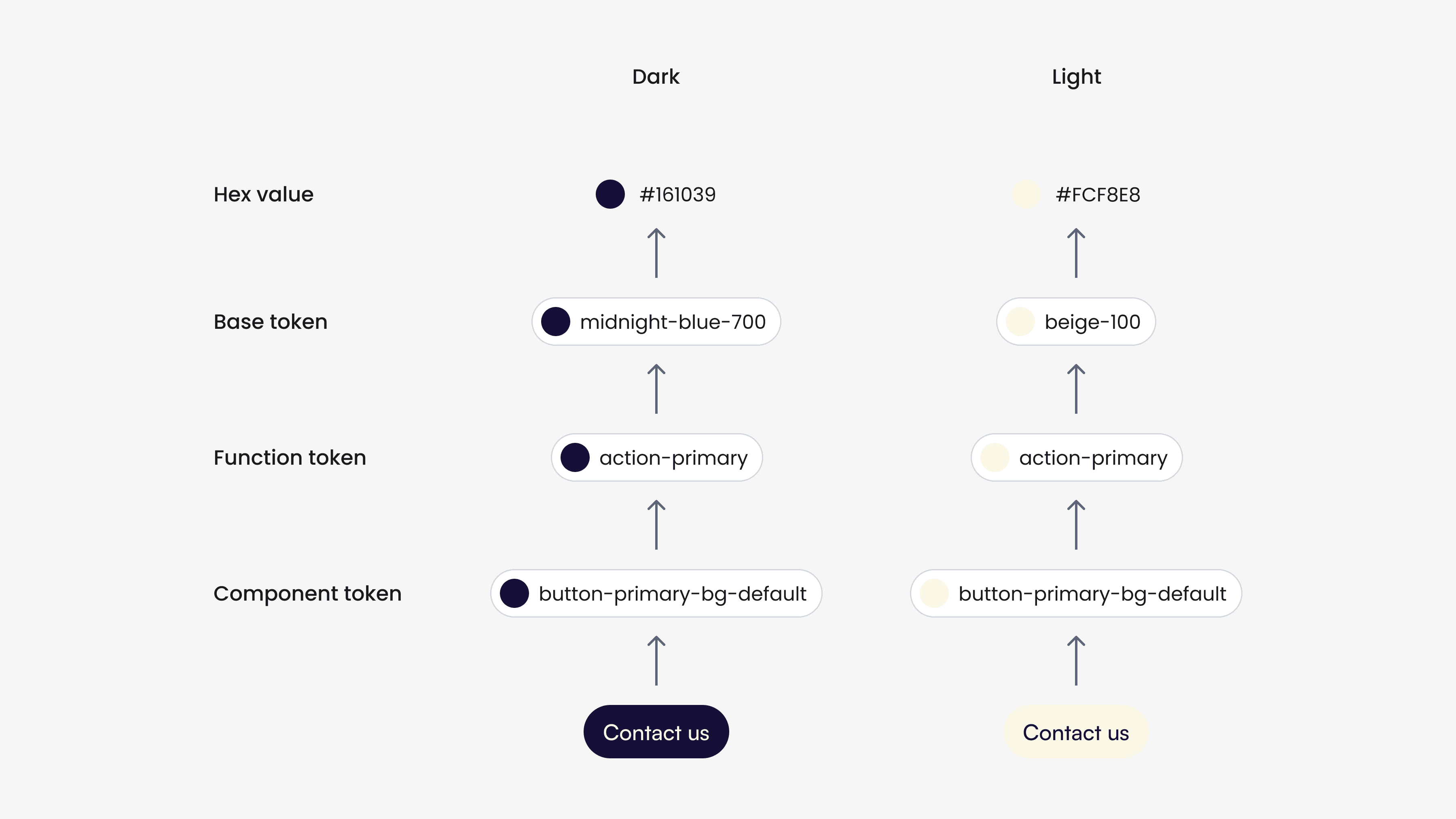
Defined design tokens for consistency, scalability, and faster development handoff.
Although the website was scoped as a one-pager, I proactively defined design tokens in Figma to ensure visual consistency and support future scalability. Since the Figma-to-Webflow plugin reads variables directly, this also accelerated the development handoff, translating design decisions into the live site with minimal manual effort.
Highlight 3
Designed and independently built the website using Webflow.
Beyond UI design, I handled the full implementation myself, leveraging a Figma-to-Webflow plugin to streamline the handoff and bring the design to life efficiently.

Result
Established a stronger brand image and a channel for customer conversion.
Within one month, I independently built the website from scratch and launched it in time for the trade fair in early October. The final result was well-received by the business owner and stakeholders.
Lessons learned
Turning ambiguity into alignment through visual communication.
This project taught me that stakeholders don't always know what they need, and that is where a designer's value lies. By asking the right questions and using wireframes, prototypes, and UI mockups as visual anchors, I learned how to align expectations and guide the team toward a shared vision.
Next project
Improved order details readability to enhance after-sales experience.